

If you have spent any amount of time researching affiliate marketing, you have almost certainly come across ClickBank. People talk about it constantly — in forums, YouTube videos, blog posts, and online courses. Some swear by it. Others dismiss it entirely. And if you are just starting out, it can be genuinely hard to figure out who to listen to.
I have been working with ClickBank for several years now. I have promoted products, tested different traffic strategies, made mistakes, earned commissions, and gradually figured out what actually works and what does not. This guide is not a surface-level overview. It is a real, experience-backed breakdown of everything you need to know about ClickBank for beginners — from how the platform works to how you can realistically start earning from it.
Whether you are completely new to affiliate marketing or you have tried other platforms and are now considering ClickBank, by the end of this article you will have a clear picture of what to expect and how to move forward.
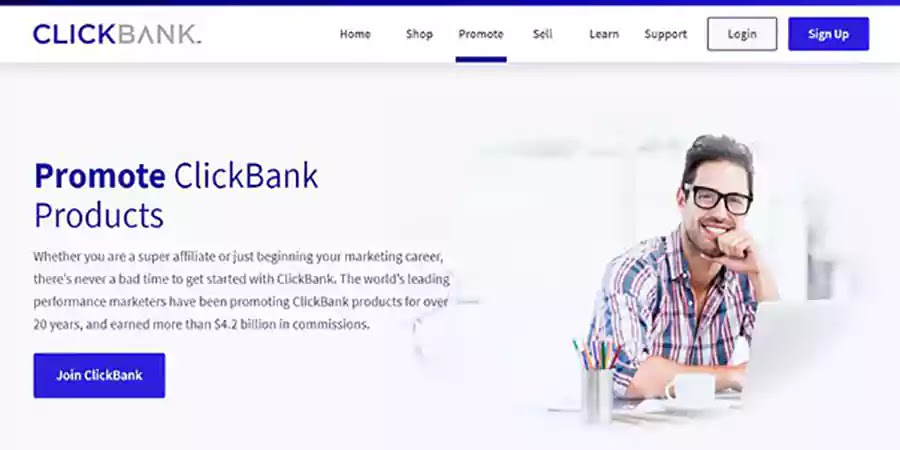
What Is ClickBank and Why Does It Matter?
At its core, ClickBank is a marketplace — a platform where people who create products connect with people who want to promote those products in exchange for a commission. Think of it like a bridge between two groups: sellers and affiliates.
ClickBank was founded in 1998, which makes it one of the oldest platforms of its kind still operating today. That kind of longevity is not accidental. The platform has survived multiple shifts in the digital economy because it offers something genuinely useful to both sides of the equation.
The majority of products on ClickBank are digital — things like e-books, online courses, software, and video training programs. But the marketplace has expanded significantly over the years, and you will also find a solid selection of physical products including dietary supplements, survival gear, and specialty gadgets.
What separates ClickBank from many other affiliate networks is how open it is. You do not need to apply to each individual program, wait for approval, or prove that you have a large audience before you can start. In most cases, you can sign up, browse the marketplace, grab your affiliate link, and begin promoting within the same hour.
That accessibility is a big part of why so many beginners gravitate toward ClickBank. It removes a lot of the friction that can make other networks frustrating when you are just starting out.
How Does ClickBank Actually Work?
Understanding the mechanics of ClickBank is important before you dive in. Here is how the whole system operates from start to finish.
The Three Parties Involved
Every ClickBank transaction involves three parties:
- The Seller (Vendor): This is the person or company that creates the product. They list it on ClickBank, set a price, and decide what commission rate they want to offer affiliates.
- The Affiliate: This is you — the person who promotes the product to potential buyers using a unique tracking link. When someone clicks your link and makes a purchase, you earn a commission.
- ClickBank: The platform sits in the middle, handling payment processing, tracking sales, calculating commissions, and distributing earnings to both sellers and affiliates.
This structure makes ClickBank relatively simple to understand. You do not have to deal with customer service, process refunds, or worry about product delivery. ClickBank and the seller handle all of that. Your job as an affiliate is to drive traffic and generate sales.
How Commissions Are Tracked
When you choose a product to promote in the ClickBank marketplace, you generate what is called a HopLink — this is your unique affiliate tracking link. When someone clicks that link and completes a purchase within a certain time window, ClickBank credits the sale to your account.
ClickBank uses cookie-based tracking, which means that even if someone clicks your link, leaves the page, and comes back later to buy, you can still receive credit for that sale. The tracking window varies by product, so it is worth checking the details for each one you choose to promote.
When and How You Get Paid
ClickBank pays affiliates on a regular schedule — typically weekly or bi-weekly, depending on your account settings. There is a minimum payout threshold, which starts at $10 by default but can be adjusted upward. Once you hit that threshold, your earnings are released.
Payment options include check, direct deposit (for US-based affiliates), wire transfer, and Payoneer. For those outside the United States, Payoneer is generally the most practical option and the one I personally recommend based on my own experience receiving payments.
Is ClickBank Free to Join?
Yes — joining ClickBank as an affiliate is completely free. There are no monthly fees, no subscription costs, and no upfront investment required. You create an account, browse the marketplace, and start promoting.
ClickBank does charge transaction fees on each sale, but these are deducted automatically from the sale amount before commissions are distributed. As an affiliate, you never pay these fees out of pocket. The seller absorbs the cost as part of using the platform to distribute their product.
For sellers, there is a one-time activation fee to list products, but again, this does not affect you as an affiliate.
ClickBank vs. Other Affiliate Networks

A common question among beginners is how ClickBank compares to other affiliate platforms. The honest answer is that it depends on what you are looking for.
If you compare ClickBank to networks like ShareASale, CJ Affiliate, or Impact, you will notice that those platforms tend to feature more well-known brands and require approval processes for each program. ClickBank is more open, which lowers the barrier to entry but also means the quality of products varies significantly.
Compared to platforms like Hotmart or Monetizze — which are popular in Spanish and Portuguese-speaking markets — ClickBank focuses primarily on the English-speaking world. This is actually an advantage in many ways. The English-speaking market, particularly in countries like the United States, Canada, the United Kingdom, and Australia, has a high concentration of online buyers. Commissions are paid in US dollars, which is a meaningful benefit if you are based in a country with a weaker currency.
The tradeoff is that you need to create or translate content in English to effectively target these markets. More on that later.
How to Make Money With ClickBank as an Affiliate
This is the part most people are really here for, so let me be straightforward with you. Making money with ClickBank is genuinely possible, but it requires real effort, a clear strategy, and consistency. It is not a passive income button you press once and forget about.
Here is the core process broken down into stages:
Step 1 — Create Your ClickBank Account
Head over to ClickBank.com and sign up for a free affiliate account. You will need a valid email address and some basic personal information. You can set up your payment method later once you start generating sales — there is no need to rush that step when you are first getting started.
Step 2 — Explore the ClickBank Marketplace
Once inside your account, navigate to the marketplace. You will see thousands of products organized by category. Each listing shows key data including the product's gravity score, average commission per sale, and a brief description.
The gravity score is particularly important. It reflects how many affiliates have made at least one sale of that product in a recent period. A high gravity score means the product is actively selling and has a proven market. However, it also means more competition. A moderate gravity score — somewhere in the range of 20 to 100 — is often a sweet spot for beginners.

Step 3 — Choose a Product to Promote
Choosing the right product is one of the most important decisions you will make. Here is what to look for:
- Commission rate: Aim for products offering at least 50% commission on digital products. Physical products will naturally have lower margins, but look for a minimum of 20% to 30%.
- Sales page quality: Before you promote anything, visit the product's sales page as a regular visitor would. Is it convincing? Does it answer the buyer's questions? A weak sales page will hurt your conversion rate no matter how much traffic you send.
- Upsell structure: Many ClickBank products include upsells — additional offers presented to the customer after the initial purchase. These upsells earn you additional commissions, so products with a solid upsell flow can significantly increase your average earnings per customer.
- Affiliate resources: Check if the product has an affiliate support page. Good sellers provide email swipe copy, banner ads, keyword suggestions, and other resources that make your job easier.
- Refund rate: ClickBank allows refunds within 60 days on most products. A product with a high refund rate will eat into your commissions. While ClickBank does not display refund rates publicly in the marketplace, you can often find information about this in affiliate forums or by testing the product yourself.
Step 4 — Understand Your Target Audience
Before you create a single piece of content or run a single ad, you need to understand exactly who you are trying to reach. What problems do they have? What questions are they searching for online? What language do they use to describe their situation?
The more specifically you can answer these questions, the more effective your promotion will be. Vague targeting leads to wasted effort and disappointing results.
Step 5 — Choose a Promotion Strategy
There are several legitimate ways to promote ClickBank products. Some are free and take time. Others require a budget but can deliver faster results. Here is an overview of the main approaches:
- Content marketing (blog or website): Writing articles, product reviews, comparison posts, and how-to guides that rank in search engines is one of the most sustainable long-term strategies. It takes months to build momentum, but once your content ranks, it can drive consistent traffic and commissions without ongoing costs.
- YouTube channel: Creating video reviews, tutorials, and informational videos is another powerful free strategy. YouTube is the world's second-largest search engine, and video content often ranks in Google results as well.
- Email marketing: Building an email list allows you to promote products directly to people who have already expressed interest in your niche. This is one of the highest-converting channels available and gives you an asset you own outright — unlike social media followers.
- Paid advertising: Platforms like Google Ads and Microsoft Ads can drive targeted traffic quickly, but they require a budget and careful management. Some ClickBank products — particularly supplements — have advertising restrictions on major platforms, so always check policy compliance before running paid ads.
- Social media: Organic content on platforms like TikTok, Instagram, Pinterest, and Facebook can generate traffic to your affiliate links, though policies around direct affiliate link sharing vary by platform and should be reviewed carefully.
The Best ClickBank Product Categories for Affiliates
Not all ClickBank categories are created equal. Some consistently outperform others in terms of conversion rates, commission size, and buyer intent. Here is a detailed look at the categories worth your attention.
1. Health and Dietary Supplements
This is one of the most profitable categories on ClickBank — and also one of the most competitive. Supplements covering weight loss, blood sugar support, joint health, testosterone, and similar topics have enormous demand and commission structures that can pay out over $100 per sale in some cases.

However, this category comes with real challenges. Both Google and Facebook have strict advertising policies around health claims, which makes paid traffic more complicated. Many affiliates who rush into promoting supplements with paid ads end up with blocked accounts and wasted budgets. If you choose this category, lean into content marketing and SEO rather than paid advertising, at least until you understand the restrictions in depth.
The physical nature of these products also means refunds happen. Build your promotion strategy around honest, accurate content that sets realistic expectations.
2. E-Books and Digital Guides
E-books and PDF guides covering topics like fitness, relationships, financial management, and personal development have been staples of the ClickBank marketplace for years. They tend to sell at lower price points — often between $10 and $40 — but the conversion rates are frequently higher than more expensive products.
Commissions on e-books typically range from around $7 to $25 per sale depending on the price and commission rate. While that might not sound like a lot per sale, volume can add up quickly, especially if you are generating consistent organic traffic.
Many e-book products also include upsells — coaching programs, video courses, or companion guides — that can significantly increase your earnings per customer.
3. Software and Digital Tools
Software products on ClickBank often command higher price points and solid commission rates. Tools in categories like video creation, SEO, productivity, and online business are particularly popular.
One significant advantage of software products is that buyers tend to be more motivated — they are looking for a specific tool to solve a specific problem, which makes them easier to convert. Commissions in this category typically fall between $25 and $60 per sale, and some software products include recurring subscriptions, meaning you earn a commission every month that the customer stays subscribed.
4. Online Courses and Video Training
The demand for online learning has grown dramatically over the past several years, and ClickBank reflects that trend. You will find courses covering everything from guitar lessons and cooking to investing and web design.
Promoting online courses works exceptionally well if you can build an audience in the same niche. A YouTube channel, a blog, or an email list focused on, say, personal finance makes promoting a related financial course feel natural and authentic — which always converts better than cold promotion.
Commission rates on courses vary widely, from around 30% to 75%, and the ticket prices can range from $27 all the way to several hundred dollars.
5. Survival and Outdoor Gadgets
Physical products in categories like survival preparedness, outdoor tools, and emergency gear have carved out a dedicated niche on ClickBank. Products like solar chargers, tactical flashlights, bug zappers, and emergency kits attract a passionate, engaged buyer base.
Commission rates on physical products are naturally lower than digital products — typically in the 10% to 40% range — but the audiences in these niches tend to be highly loyal and willing to purchase multiple products over time.
Do You Need to Know English to Promote ClickBank Products?
This is one of the most common questions I hear from people outside English-speaking countries, and the honest answer is: not as much as you might think.
My own English is fairly basic. Over the years, I have relied on a combination of online translation tools, grammar checkers, and content editing software to produce English content that reads naturally. Tools like Grammarly and DeepL have improved dramatically and can help you produce clean, professional English content even if it is not your first language.
For video content, text-to-speech technology has advanced to a point where entire YouTube channels operate without the creator ever recording their own voice. You write a script, run it through a text-to-speech tool, add relevant footage or screen recordings, and publish it. Many of the supplement review videos you find on YouTube use exactly this method.
That said, if you can invest time in genuinely improving your English writing, it will pay dividends. Content that reads naturally and credibly will always outperform content that feels translated or mechanical.
Which Countries Are Accepted on ClickBank?
This is an important practical point that often gets glossed over in general ClickBank guides. ClickBank does not accept affiliates or sellers from every country, and if your country is on the restricted list, you will not be able to create an account.
Countries Currently Banned from ClickBank
The following countries are not permitted to participate on the ClickBank platform as of the most recent update to their terms of service:
- Afghanistan
- Angola
- Azerbaijan
- Bangladesh
- Belarus
- Benin
- Bosnia and Herzegovina
- Burkina Faso
- Burundi
- Cameroon
- Central African Republic
- Chad
- Congo and DR Congo
- Croatia
- Cuba
- Djibouti
- Dominican Republic
- Ecuador
- Equatorial Guinea
- Eritrea
- Ethiopia
- Gabon
- Guinea and Guinea-Bissau
- Guyana
- Iran
- Iraq
- North Korea
- Ivory Coast
- Liberia
- Libya
- Madagascar
- Malawi
- Mauritania
- Moldova
- Mongolia
- Mozambique
- Myanmar
- Nepal
- Niger
- Nigeria
- Palestinian Territory
- Papua New Guinea
- Rwanda
- Serbia
- Senegal
- Sierra Leone
- Somalia
- Sudan
- Syria
- Sri Lanka
- Tanzania
- Tajikistan
- Timor-Leste
- Togo
- Turkmenistan
- Uganda
- Zambia
- Algeria
Countries Recently Added to ClickBank
ClickBank has expanded its accepted country list over time. The following countries were added more recently and are now permitted to join the platform:
- Albania
- Argentina
- Armenia
- Bolivia
- Brazil
- Cambodia
- Colombia
- Comoros
- Falkland Islands
- Georgia
- Haiti
- Honduras
- Indonesia
- Kyrgyzstan
- Macedonia
- Mali
- Montenegro
- Nicaragua
- Pakistan
- Paraguay
- Peru
- Philippines
- Russian Federation
- Swaziland
- Ukraine
- Uzbekistan
- Venezuela
- Vietnam
- Yemen
If your country is not on either list, the safest approach is to check ClickBank's official support page directly for the most current information, as the list can change.
How to Promote ClickBank Products Effectively
A lot of people sign up for ClickBank, grab an affiliate link, share it a few times, see nothing happen, and then conclude that the platform does not work. The reality is that the platform works fine — what those people are missing is a coherent promotion strategy.
Here is a framework that I have found to be reliable across different niches and product types.
Know the Product Before You Promote It
This sounds obvious, but it is frequently overlooked. Before you write a single word of content or run a single ad, go through the product's sales page, read the supporting materials, and if possible, actually purchase and use the product yourself.
Promoting something you do not understand leads to generic, unconvincing content. People can tell when a review was written by someone who has never touched the product they are talking about. Authentic, specific content built on real knowledge will always perform better.
Build a Content Hub Around a Specific Niche
Rather than promoting random products from different categories, build your affiliate presence around a single niche. A blog or YouTube channel focused on, for example, home fitness, keto dieting, or personal productivity gives you a coherent platform where every piece of content reinforces the others.
Within that niche, you can promote multiple ClickBank products that are relevant to your audience. Over time, as your content grows and your audience trusts you, your conversion rates will improve.
Write Honest, Detailed Product Reviews
One of the most effective content formats for affiliate marketing is the in-depth product review. A well-written review covers what the product is, who it is designed for, what it includes, what the pros and cons are, and who should — and perhaps more importantly, should not — buy it.
Honest reviews that acknowledge weaknesses build significantly more trust than purely promotional content. And trust is what drives conversions.
Target long-tail keywords in your reviews — phrases like "Product Name review 2024," "does Product Name actually work," or "Product Name vs Alternative" — because these reflect the specific questions buyers ask before making a purchase decision.
Use Comparison and Alternative Content
Comparison articles — "Product A vs Product B" or "Best ClickBank Products for Weight Loss" — attract readers who are already deep in the buying process and just deciding between options. These are some of the highest-converting content formats you can create.
Build an Email List From Day One
If there is one thing I would change about how I approached ClickBank in the beginning, it would be starting email list building much earlier. An email list gives you a direct line to your audience that does not depend on search engine rankings or social media algorithms.
Offer something valuable for free — a guide, a checklist, a short course — in exchange for an email address. Then build a relationship with your subscribers by delivering genuinely useful content before recommending products. The relationship comes first; the promotion follows naturally.
Target Tier 1 Countries
For ClickBank products, which are primarily sold to English-speaking buyers, focus your targeting efforts on Tier 1 countries: the United States, Canada, the United Kingdom, Australia, and New Zealand. These markets have higher average incomes, stronger online purchasing habits, and much higher conversion rates for the types of products available on ClickBank.
If you are running paid ads, you can specify your geographic targeting directly. If you are relying on organic content, use English and focus on topics and search terms that are most relevant to audiences in these countries.
How to Withdraw Your ClickBank Earnings
Once you start generating sales, the next question is how to actually get your money. ClickBank offers several withdrawal options depending on where you are located.
Payment Options Available
- Check: ClickBank can mail a physical check to your address. This is the slowest option and not practical for most international affiliates.
- Direct Deposit (ACH): Available for affiliates with US bank accounts. Fast and reliable, but not accessible to those outside the United States.
- Wire Transfer: Available internationally but typically involves bank fees that can cut into smaller payouts.
- Payoneer: For affiliates outside the United States, Payoneer is generally the most convenient and cost-effective option. You receive your ClickBank earnings into your Payoneer account and can then transfer to your local bank account or use the Payoneer card directly.
From personal experience, I can confirm that the ClickBank-to-Payoneer pathway works reliably. Transfers arrive within the expected timeframe, fees are reasonable, and the process of moving funds from Payoneer to a local bank account is straightforward.
To set up Payoneer, visit Payoneer.com and create a free account. Once approved, you will receive account details that you can enter into your ClickBank payment settings.
Payment Thresholds and Frequency
ClickBank pays on a weekly or bi-weekly schedule. The default minimum payout threshold is $10, but you can increase this if you prefer to accumulate a larger balance before receiving a transfer. Most affiliates who are actively generating sales prefer weekly payouts once they have set up their payment method and confirmed their account.
Note that ClickBank holds new affiliate accounts for a brief period after the first sales — this is a standard fraud prevention measure. Once your account is established and your payment method is confirmed, payments process without delay.
Common Mistakes Beginners Make on ClickBank
Since we are talking about ClickBank for beginners, it is worth addressing the mistakes that consistently trip people up. Learning from these before you start will save you real time and money.
Choosing Products Based on Commission Rate Alone
It is tempting to filter by highest commission and start promoting whatever comes up at the top. The problem is that a high commission rate on a product nobody wants to buy is worth exactly nothing. Evaluate the product holistically — market demand, sales page quality, gravity score, and refund rate — not just the commission percentage.
Sending Traffic Directly to an Affiliate Link
Sending cold traffic directly to a ClickBank product page is rarely effective. Most visitors need to be warmed up — they need context, trust, and a reason to take action. Build a bridge between the traffic source and the product. This might be a blog post, a review article, a YouTube video, or an email sequence. Direct linking can work with very targeted paid traffic and very strong ads, but even then, a landing page typically outperforms a raw affiliate link.
Promoting Products in Multiple Niches Simultaneously
Spreading your attention across multiple unrelated niches is one of the fastest ways to make no progress in any of them. Focus is the foundation of an effective affiliate marketing operation. Pick one niche, one product or small product group, one traffic source, and go deep before expanding.
Ignoring the Affiliate Resource Page
Almost every quality product on ClickBank has an affiliate resource page — sometimes called a JV page or partner page. This page contains tools and information designed to help affiliates succeed: email swipe copy, banner ads, keyword lists, demographic information, and conversion data from the seller's own testing. Many beginners never look at these pages, which means they miss valuable shortcut information.
Giving Up Too Early
Affiliate marketing — regardless of the platform — takes time to produce consistent results. If you are relying on SEO-driven content, expect a minimum of three to six months before you see meaningful organic traffic. If you are building an audience on YouTube, the first several months are typically slow. Consistency over time is what separates people who succeed at this from people who do not.
Is ClickBank Worth It in Today's Market?
This is a fair question to ask. ClickBank has been around for over 25 years, and the digital marketing landscape has changed enormously in that time. Is the platform still relevant and worth your effort?
In my view, yes — but with realistic expectations.
ClickBank still offers a legitimate and accessible path to affiliate income, particularly for beginners who do not yet have the standing to get accepted into more selective programs. The marketplace has a wide variety of products, commissions are competitive, and the payment infrastructure is reliable.
That said, ClickBank is not a magic solution. It requires the same foundational skills that any affiliate marketing endeavor requires: understanding your audience, creating content that genuinely helps people, building trust over time, and staying consistent.
The affiliates who struggle with ClickBank usually struggle because they are looking for shortcuts that do not exist, not because the platform itself is broken.
Frequently Asked Questions About ClickBank
How much money can I realistically make with ClickBank?
There is no single honest answer to this because it depends entirely on your niche, your traffic volume, and the products you promote. Some affiliates earn a few hundred dollars per month as a side income. Others have built full-time businesses generating thousands of dollars monthly. What is realistic for you depends on how much time and effort you invest, and how effectively you execute your strategy. Focus on building a real, sustainable system rather than chasing a specific income number.
Can I use social media to promote ClickBank products?
Yes, but with care. Each social media platform has its own policies around affiliate links and certain product categories. Direct affiliate links are often restricted or perform poorly in organic posts. A better approach is to direct your social media audience to a blog post, video review, or landing page where they can get more information before clicking your affiliate link.
Do I need a website to make money with ClickBank?
You do not strictly need a website to promote ClickBank products, but having one gives you significantly more control and flexibility. A website allows you to build SEO-driven content, collect email subscribers, and create a professional hub for your affiliate business. If you do not have a website, you can start with a YouTube channel or build an email list, but a website should be on your roadmap.
How does ClickBank handle refunds and how does that affect affiliates?
ClickBank offers customers a 60-day refund window on most products, which is part of their buyer protection policy. When a refund is processed, the commission for that sale is deducted from your account. This is why it matters to choose products with low refund rates and to promote them honestly — setting realistic expectations reduces refund requests significantly.
Can I promote ClickBank products without paying for ads?
Absolutely. The majority of successful ClickBank affiliates I have come across rely primarily on free traffic through SEO content, YouTube, and email marketing. Paid ads can accelerate results, but they are not necessary — and in the early stages, building organic traffic first helps you understand what converts before you put money behind it.
Is ClickBank safe and legitimate?
ClickBank itself is a legitimate, long-established platform with a transparent payment system and clear terms of service. Like any marketplace, the quality of individual products varies — there are excellent products and there are mediocre ones. The platform's 60-day refund policy exists partly to protect buyers from poor-quality purchases. As an affiliate, your reputation depends on what you choose to promote, so exercise judgment about the products you represent.
What is the difference between a vendor and an affiliate on ClickBank?
A vendor (also called a seller or product owner) is someone who creates a product and lists it on ClickBank for affiliates to promote. An affiliate is someone who promotes those products in exchange for a commission on each sale they generate. You can be both simultaneously — having your own product while also promoting other people's products as an affiliate.
Final Thoughts: Starting Your ClickBank Journey the Right Way
ClickBank has been part of my affiliate marketing business for several years, and it remains one of the most accessible and legitimate options available — particularly for people who are new to the space and want to start without a significant upfront investment.
The opportunity is real. The commissions are competitive. The marketplace is diverse. And the barrier to entry is low enough that almost anyone in an accepted country can get started.
But the path from account creation to consistent income requires patience, strategy, and honest effort. Choose your niche carefully. Get to know the products you promote. Build content that actually serves your audience. And do not let early slow results convince you that something is wrong — slow starts are normal in affiliate marketing, and consistency is what eventually tips the balance.
If you take one thing from everything covered in this guide, let it be this: the affiliates who succeed on ClickBank are not the ones with the cleverest tricks or the biggest ad budgets. They are the ones who commit to understanding their audience and serving them well over time. That is a slower road, but it is the one that actually leads somewhere.
Ready to Get Started With ClickBank?
If this guide has given you the clarity you were looking for, the next step is simple: create your free ClickBank affiliate account, spend some time in the marketplace getting familiar with the products in your niche, and choose one product to focus on first.
Do not try to do everything at once. Pick a direction, start creating, and refine your approach as you learn what works. The best time to start is now.
Visit the official ClickBank website to create your free account: www.clickbank.com
If you have questions about anything covered in this guide or want to share your own experience with ClickBank, drop a comment below. Real conversations about real experiences are what this kind of content is built for.

[email protected]