

A few years ago, I had a friend who spoke fluent Spanish and decent English, and she was stuck in a nine-to-five job she absolutely hated. One afternoon, she stumbled onto a freelancing platform, created a basic profile offering translation services, and landed her first paid gig within a week. Within six months, she had replaced her salary entirely. Today, she works from wherever she chooses, sets her own hours, and serves clients across three continents.
Her story is not unique. If you speak two or more languages with real fluency, you are sitting on a skill that the global economy genuinely needs. Businesses expand into new markets every single day, content creators reach international audiences, legal firms handle cross-border cases, and medical institutions treat patients who speak different languages. Every one of those situations requires a competent translator.
The question is not whether the opportunity exists. It clearly does. The real question is how to position yourself properly so you can make money translating online in a consistent, sustainable way, rather than picking up a low-paying gig here and there and burning out. That is exactly what this guide covers, from building your skills to choosing the right platforms, pricing your work, and growing a real translation business over time.
Whether you are a complete beginner or someone who has dabbled in translation but never turned it into a serious income stream, you will find practical, actionable advice here that goes well beyond the generic tips you have probably already read.

Why Translation Is One of the Most Underrated Ways to Earn Money Online
Most people think of translation as a niche skill. The reality is that it is one of the most in-demand professional services in the world. The global language services market was valued at over $56 billion in 2021 and continues to grow steadily, driven by international e-commerce, global content marketing, legal globalization, and the medical sector.
What makes it particularly attractive compared to other online income streams is the barrier to entry for clients. Not just anyone can translate a legal contract from German to English with precision. That expertise protects translators from extreme commoditization in a way that, say, data entry work simply cannot be protected.
That said, the market is also competitive. There are thousands of translators on every major platform. The difference between those who earn well and those who struggle usually comes down to positioning, specialization, and professionalism, not just raw language ability. Keep that in mind as you work through this guide.
Who Can Realistically Make Money as an Online Translator?
You do not need a linguistics degree to start. What you do need is genuine, advanced proficiency in at least two languages, not the kind you picked up from a language-learning app, but the kind where you can read a complex business document in one language and reproduce its meaning, tone, and intent accurately in another.
Beyond language skill, you need attention to detail, the discipline to meet deadlines, and the patience to research terminology in fields you may not be deeply familiar with. Those qualities matter far more than a fancy credential, though credentials certainly help.
The language pairs that tend to command the highest rates include:
- English and Spanish
- English and Mandarin Chinese
- English and Arabic
- English and French
- English and German
- English and Japanese
- English and Portuguese
That said, rarer language pairs, such as English paired with Swahili, Tagalog, or Icelandic, can sometimes command premium rates precisely because the supply of qualified translators is limited. If you happen to speak a less common language fluently, that is a genuine competitive advantage.
Step 1: Develop Genuine, Advanced Language Skills
This sounds obvious, but it is worth being direct: surface-level language ability will not get you far in professional translation. Clients can tell the difference between someone who is fluent and someone who is competent enough to get by in casual conversation. Professional translation requires a much deeper level of mastery.
What "Advanced Language Skills" Actually Means for Translators
Advanced proficiency in a translation context means you can:
- Read and understand complex texts across multiple subject areas, including legal, medical, financial, and technical content
- Recognize idiomatic expressions and cultural references that would not translate literally
- Write with natural fluency in your target language, not just grammatical correctness
- Spot ambiguous phrasing in the source text and make intelligent decisions about how to handle it
- Understand the register of a document, whether formal, casual, persuasive, or instructional, and match it in translation
If you are not fully there yet, that is fine. The path forward is consistent, deliberate practice. Read newspapers, academic papers, and literature in both languages. Watch foreign-language films without subtitles. Engage in conversations with native speakers. Write regularly in your second language and seek feedback.
Cultural Knowledge Is Just as Important as Linguistic Skill
Language does not exist in isolation. A phrase that is perfectly acceptable in Mexican Spanish might be confusing or even offensive in Castilian Spanish. A marketing slogan that works brilliantly in American English might fall completely flat in British English. Great translators are also cultural interpreters, and developing that cultural sensitivity takes time, travel, reading, and genuine curiosity about the people who speak the languages you work with.
Specializing in a Subject Area Multiplies Your Earning Potential
One of the most effective things you can do early in your translation career is to specialize. Rather than being a generalist who translates anything, become the person who translates legal documents, or medical research, or technical manuals, or marketing copy, or software interfaces.
Specialization does several things for you simultaneously. It allows you to charge higher rates because you bring subject-matter expertise in addition to language skill. It makes it easier for clients to find you because you can position yourself clearly. And it reduces the time you spend researching terminology because you become genuinely knowledgeable in your niche over time.
If you already have a professional background in a particular field, such as medicine, law, engineering, or finance, that is an enormous head start. Lean into it.
Step 2: Get a Translation Certification or Relevant Qualification
A certification is not mandatory to start earning money as a translator. Many successful freelance translators are self-taught professionals who built their reputation through consistent, high-quality work. However, a recognized credential can significantly accelerate your credibility, particularly when approaching agencies and corporate clients who have formal vendor qualification processes.
Translation Certifications Worth Pursuing
Several organizations offer widely recognized certifications in translation:
- American Translators Association (ATA) Certification: One of the most respected credentials in the industry, particularly for North American markets. The examination is rigorous, which is part of what makes it valuable. Learn more at the ATA website .
- Chartered Institute of Linguists (CIOL) Diploma in Translation: Highly respected in the United Kingdom and internationally. Suitable for translators working with European languages. Visit the CIOL qualifications page .
- ITI Membership (Institute of Translation and Interpreting): Membership in this UK-based professional body adds credibility and provides access to a professional network. See ITI membership options .
- University degrees in translation or linguistics: A bachelor's or master's degree in translation, applied linguistics, or a related field provides both theoretical grounding and practical training. It is particularly useful if you plan to work with agencies or pursue academic translation.
Should You Invest in Certification Right Away?
If you are just starting out, the honest answer is: not necessarily. The time and money required to earn a recognized certification are significant, and you can begin building your client base and portfolio while working toward a credential. However, do put it on your medium-term roadmap, especially if you want to move into legal, medical, or certified translation, which are higher-paying segments where formal credentials are often required.
Step 3: Build a Translation Portfolio That Actually Gets You Hired
Your portfolio is your most powerful sales tool. It is the first thing potential clients will ask for, and it is often what determines whether they hire you or move on to the next translator on the list. Yet many beginners overlook this step or approach it halfheartedly.
How to Build a Portfolio When You Have No Paid Experience
This is the classic chicken-and-egg problem: clients want experience, but you need clients to get experience. Here is how to solve it:
- Translate public domain texts: Choose articles, short stories, or documents that are freely available and translate them as practice pieces for your portfolio. Be transparent that these are self-initiated translations, not paid work.
- Volunteer your services: Nonprofits, community organizations, and open source software projects often need translation help and cannot afford to pay. Offer your services at no charge in exchange for a testimonial and the right to showcase the work.
- Take on lower-rate introductory projects: Platforms like Upwork and Fiverr allow you to start at lower rates to build your review history. Once you have several positive reviews, raise your prices.
- Translate your own content: If you write a blog or have any original content, translating it yourself creates a direct, verifiable example of your bilingual ability.
What to Include in a Strong Translation Portfolio
When you have samples ready, organize them thoughtfully. A strong portfolio includes:
- Three to five translation samples across different content types, such as a legal document, a marketing piece, a technical manual excerpt, and a general article
- A clear indication of the source language and target language for each sample
- A brief note explaining the context and any challenges the translation presented
- Testimonials or references from clients, supervisors, or professors who can vouch for your language ability
- Your language pairs and any subject-matter specializations
Host your portfolio on a personal website or a professional platform. Avoid keeping it locked in a PDF that clients cannot easily access.
Step 4: Establish Your Online Presence as a Freelance Translator
In the current market, an online presence is not optional. It is the foundation of your business. Clients who discover you through search, social media, or professional directories will always check your online presence before reaching out. If they find nothing, they will move on.
Option A: Build Your Own Translation Website
A personal website is the most professional approach and gives you full control over how you present yourself. Your website should include:
- A clear, benefit-focused headline that tells visitors what you do and who you serve
- Your language pairs and subject-matter specializations
- A portfolio section with samples and testimonials
- A simple contact form or booking link
- Your credentials and professional background
- A blog or resources section where you share translation insights, which also helps with search engine visibility
Platforms like WordPress make it straightforward to build a professional site without technical expertise. If you want to attract clients through organic search, investing time in SEO for your site is well worth the effort.
Option B: Use Freelancing Platforms as Your Primary Presence
If building a website feels overwhelming at the start, prioritize creating a strong profile on one or two major freelancing platforms. Optimize your profile with relevant keywords, a professional photo, a compelling bio, and detailed service descriptions. A well-optimized Upwork or Fiverr profile can generate consistent inbound inquiries without any additional marketing effort.
Professional Profiles on Translation-Specific Directories
Beyond general freelancing platforms, translation-specific directories are worth maintaining because the clients who search them are specifically looking for translators, which means higher purchase intent and less time wasted on unqualified leads. Include your profile on directories like ProZ.com and TranslatorsCafe, both of which are well-established in the industry.
Step 5: The Best Platforms to Make Money Translating Online
Knowing where to look for work is half the battle when you are starting out. Below is an honest breakdown of the major platforms, with their real strengths and limitations, so you can choose the right starting points for your situation.
ProZ.com

ProZ.com is widely regarded as the largest online community of professional translators. It operates as both a job board and a professional network, allowing translators to bid on posted projects and connect with translation agencies globally.
- Best for: Experienced translators looking to connect with agencies and direct clients
- Key benefit: Highly targeted audience of buyers who specifically need professional translation services
- Worth noting: Free membership has limited access; a paid membership unlocks the full range of job listings and profile features
TranslatorsCafe

TranslatorsCafe is another dedicated translation marketplace that connects freelance translators with clients and agencies. It offers a directory listing, a job board, and forums where translators can engage with the professional community.
- Best for: Translators who want to build agency relationships
- Key benefit: Focused, professional environment with less noise than general freelancing platforms
- Worth noting: Smaller volume of job postings than ProZ, but often good quality projects
Gengo
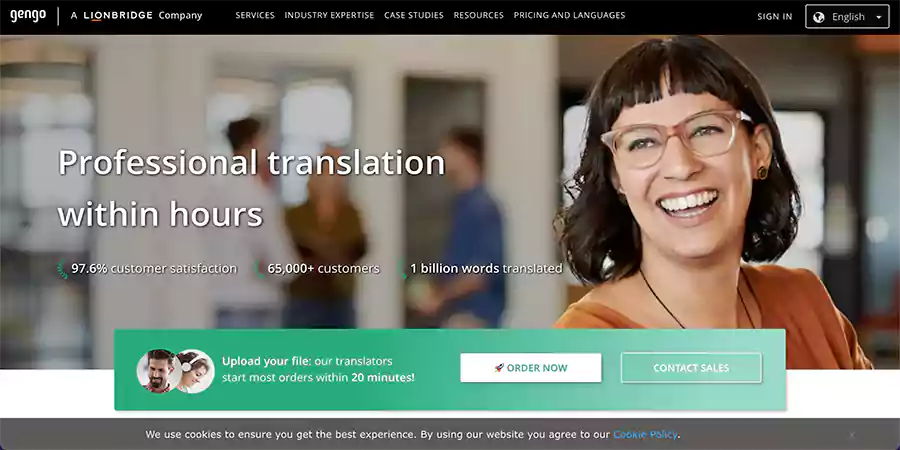
Gengo is a translation platform that works somewhat differently from the others. Rather than bidding on individual projects, translators pass a qualification test and then receive job opportunities based on their language pairs and skill level.
- Best for: Beginners who want a steady stream of work without extensive marketing effort
- Key benefit: Consistent work flow once accepted; no need to bid or market yourself actively
- Worth noting: Rates are generally lower than what you could earn with direct clients; better suited for building early experience than maximizing income
Upwork
Upwork is one of the world's largest freelancing platforms and hosts a significant volume of translation jobs. Unlike specialized translation platforms, Upwork gives you direct access to businesses and individual clients across every industry.
- Best for: Translators who want to work with direct clients across diverse industries
- Key benefit: Extremely large client base; strong potential for long-term client relationships and repeat work
- Worth noting: Competitive in the early stages; building your review history takes time and requires strategic bidding on relevant projects
Fiverr
Fiverr operates on a "gig" model where you create service listings and clients come to you, rather than you bidding on their projects. This makes it more passive once your listings are established and optimized.
- Best for: Translators who can package their services clearly and want inbound rather than outbound work
- Key benefit: Less time spent pitching; buyers browse and place orders directly
- Worth noting: Fiverr takes a 20 percent commission, and the platform has a reputation for lower-priced work, though skilled translators who position themselves well can command strong rates
Freelancer.com
Freelancer.com is a large general freelancing platform similar to Upwork. It lists translation projects across many language pairs and content types.
- Best for: Translators looking for a wide variety of project types
- Key benefit: High volume of posted projects; international client base
- Worth noting: Can be highly competitive on price; requires strong proposal writing to stand out
One More Platform Worth Mentioning: Smartcat
Smartcat is a newer but rapidly growing translation platform that combines a marketplace with translation technology tools. It is particularly useful for translators who want to work with translation agencies and use computer-assisted translation (CAT) tools, which can significantly improve your productivity.
Step 6: Promote Your Translation Services Effectively
Being on the right platforms is a starting point, not a complete strategy. The translators who build sustainable, well-paying businesses actively promote themselves rather than waiting to be discovered.
Use LinkedIn Strategically
LinkedIn is arguably the most valuable social platform for professional translators. It is where businesses, legal firms, agencies, and marketing departments actively look for service providers. Optimize your LinkedIn profile with your language pairs, specializations, and key translation-related terms. Connect with project managers at translation agencies, marketing directors at international companies, and others who are likely to need your services.
Post content regularly. Share insights about translation challenges, discuss interesting linguistic nuances, or offer perspective on translation trends. Consistent, thoughtful posting keeps you visible to your network and positions you as a knowledgeable professional.
Engage in Translation Communities and Forums
Online communities such as the forums on ProZ.com, Reddit's r/translation community, and various Facebook groups for freelance translators are excellent places to learn, ask questions, share knowledge, and build relationships with other professionals. Many translators get referrals through their professional networks, so being an active, helpful presence in these spaces pays dividends over time.
Reach Out Directly to Potential Clients
Cold outreach, done well, remains one of the most effective ways to find high-quality clients. Identify businesses in your target industries that operate across language markets, such as law firms with international practices, export-focused manufacturers, or digital marketing agencies serving international clients. Research the appropriate contact person and send a brief, professional email that introduces your services, highlights your relevant specialization, and offers a relevant sample or case study.
The key to effective cold outreach is relevance and personalization. Generic mass emails are easy to ignore. A short, clearly tailored message that demonstrates you understand the recipient's business gets read and considered.
Ask for Referrals from Satisfied Clients
Once you have completed a project successfully, do not be shy about asking for a referral or a testimonial. Most satisfied clients are happy to provide one, and word-of-mouth referrals are among the highest-quality leads you can receive because they come with built-in trust.
Step 7: Price Your Translation Services Competitively and Profitably
Pricing is one of the areas where many freelance translators consistently undervalue themselves, particularly when starting out. Understanding how to price your work correctly is fundamental to building an income stream that actually sustains you.
How Translation Work Is Typically Priced
Translation work is most commonly priced in one of three ways:
- Per word (source or target): The most common pricing model. Rates vary widely depending on language pair, subject matter, and experience level, but professional rates typically range from $0.08 to $0.25 per word or higher for specialized content.
- Per hour: Used for tasks where word count is not a reliable metric, such as proofreading, editing, or consulting on translation strategy. Professional rates typically range from $25 to $80 per hour or more.
- Per page: Sometimes used for legal, medical, or official document translation. Rates depend on document complexity.
Factors That Influence Your Rate
- Your language pair (rarer pairs typically command higher rates)
- Subject-matter specialization (legal, medical, and technical content pays more)
- Turnaround time (rush projects typically carry a premium)
- Your experience level and credentials
- The client type (direct clients generally pay more than agencies, which in turn pay more than translation crowdsourcing platforms)
Avoid the Race to the Bottom
One of the most damaging mistakes new translators make is undercutting the market to win clients. While a slightly lower rate makes sense when you are brand new and building your portfolio, staying at rock-bottom prices indefinitely attracts difficult, price-sensitive clients who rarely become long-term partners and who tend to generate the most friction.
As your experience and portfolio grow, raise your rates gradually. Clients who value quality will stay. Those who leave were competing purely on price, and losing them creates space for better clients.
Set Clear Terms Before Every Project
Before starting any translation project, confirm the following in writing:
- The scope of the project, including word count or page count
- The agreed rate and total estimated cost
- The delivery deadline
- The number of revisions included
- The payment method and timeline
- Who owns the rights to the translated content
Having these details confirmed in advance prevents misunderstandings and protects both parties. A simple email confirmation works fine for smaller projects; a formal contract is wise for larger or ongoing engagements.
Professionalism and Punctuality: The Qualities That Build Long-Term Client Relationships
Technical skill gets you hired. Professionalism and reliability keep clients coming back and generating referrals. These softer qualities are more important to long-term translation income than most people realize.
Always Deliver on Time
Deadlines in translation are often non-negotiable. A client who needs a document translated for a legal hearing or a product launch cannot simply wait another day. If you commit to a deadline, treat it as a firm promise. If circumstances arise that genuinely threaten your ability to deliver on time, communicate proactively and as early as possible. Clients can often accommodate an adjustment if they hear about it well in advance; they cannot accommodate a missed deadline discovered at the last moment.
Communicate Clearly and Promptly
Respond to client messages within a reasonable timeframe, especially during active projects. Clear, professional communication signals that you are organized and reliable. Ask clarifying questions before beginning a project rather than making assumptions that lead to revisions later.
Handle Feedback Professionally
Clients will occasionally request revisions or provide critical feedback. How you handle those moments defines your professional reputation. Approach feedback with openness rather than defensiveness. If the revision request is reasonable, address it promptly and without complaint. If a client is requesting changes that fall outside the agreed scope, address that calmly and professionally, explaining the scope and offering to complete additional work at an appropriate rate.
Advantages and Disadvantages of Working as an Online Translator
Like any career path, translation work has genuine strengths and real challenges. Being clear-eyed about both will help you build a sustainable approach rather than being caught off guard.
Key Advantages
- Schedule flexibility: Most translation work is asynchronous. You set your working hours and work from wherever suits you, whether that is a home office, a coffee shop, or a different country entirely.
- Global client base: You can serve clients in different countries and earn in foreign currencies, which can be particularly advantageous depending on where you live.
- Intellectual engagement: Translation requires continuous learning. Every new project introduces you to new subject matter, vocabulary, and cultural nuances. It rarely gets boring for people who are genuinely curious about language.
- Scalability: As your experience and reputation grow, you can raise your rates, attract better clients, and potentially build a small agency by subcontracting work to other translators.
- Low startup costs: You need a computer, a reliable internet connection, and your language skills. The barrier to entry on the cost side is minimal compared to most businesses.
Real Challenges to Be Aware Of
- Income variability: Especially in the early stages, work volume can be inconsistent. Building a diverse client base and maintaining relationships with recurring clients is the primary way to smooth out this variability.
- Tight deadlines and pressure: Many translation clients, particularly in legal and corporate contexts, operate under strict timelines. The expectation of quick turnarounds can be stressful, especially on large projects.
- High competition at entry level: The market for generic, general-content translation is genuinely crowded. This is a strong argument for specializing as early as possible.
- Isolation: Freelance translation is solitary work. If you thrive in collaborative, social environments, the isolation of working alone for extended periods can be a real challenge.
- Keeping up with technology: The translation industry is evolving rapidly with machine translation and AI tools. While these tools do not replace skilled human translators, particularly in complex and specialized content, they are changing the landscape. Staying current requires ongoing learning.
How to Build a Sustainable Long-Term Income from Translation
Most guides on earning money as a translator focus on the first few steps. This section is about what comes after you have established yourself and are generating consistent income, because that is where the real potential lies.
Diversify Your Client Base
Relying on a single client or a single platform for the majority of your income is a significant risk. If that client disappears or that platform changes its algorithm or fee structure, your income can collapse overnight. Aim to have at least five to eight active clients at any given time, spread across different industries and sources.
Develop Complementary Skills
Translators who offer related services can earn significantly more. Consider developing skills in:
- Proofreading and editing: Many clients need their translated content reviewed and refined. Offering this as an add-on or standalone service increases your revenue per client.
- Localization: Localization goes beyond translation to adapt content culturally for a specific market. It is a higher-value service that many businesses need but fewer translators offer.
- Transcription: Transcribing audio or video content in a foreign language is a related skill that can complement translation work.
- Subtitling and captioning: With the explosion of video content, demand for translated subtitles is growing rapidly. Tools like Rev and Amara connect translators with subtitling work.
Use Technology to Increase Your Productivity
Computer-assisted translation (CAT) tools are software programs that help translators work faster and more consistently by maintaining translation memories, terminology databases, and style guides. Popular options include:
- memoQ
- SDL Trados Studio
- CafeTran Espresso (a more affordable option for freelancers)
These tools can substantially increase the number of words you can translate per hour, which directly increases your effective hourly rate even if your per-word rate stays the same.
Request Testimonials and Build Social Proof Continuously
Social proof, in the form of client reviews, testimonials, and case studies, compounds over time. Every positive review makes it slightly easier to win the next client. Make requesting feedback a standard part of your project completion process.
Common Mistakes to Avoid as a Freelance Translator
Learning from others' mistakes saves you months or years of frustration. Here are the errors that most commonly hold new translators back:
- Accepting every project regardless of subject matter: Working outside your knowledge area leads to poor quality, stressful research, and potential errors. It is better to decline a project than to deliver substandard work that damages your reputation.
- Underpricing to win work: This builds a client base of price-focused buyers, not quality-focused ones. Price your work to reflect its value.
- Neglecting continuing education: Languages evolve. Terminology in specialized fields updates constantly. Successful translators invest time in staying current.
- Working without clear agreements: Always confirm scope, rate, deadline, and revision terms before starting. Ambiguity almost always leads to frustration.
- Ignoring self-promotion: Even excellent translators can struggle to find clients if they are not visible. Marketing yourself is not optional; it is part of the job.
- Using machine translation without careful review: Submitting machine-translated content without substantial editing is a reputation risk. Some clients will detect it immediately, and it reflects poorly on your professionalism.
Frequently Asked Questions About Making Money Translating Online
Can I make money translating online without any formal certification?
Yes, absolutely. Many successful freelance translators have no formal certification. What matters most is the quality of your work, your reliability, and your portfolio. Certification helps, particularly with agency clients and for legal or medical translation, but it is not a prerequisite for starting out.
How much can I realistically earn as an online translator?
Earnings vary considerably based on language pair, specialization, experience, and the type of clients you serve. Entry-level translators on crowdsourcing platforms might earn $10 to $20 per hour equivalent. Experienced translators working with direct clients in specialized fields can earn $50 to $100 or more per hour equivalent. Many full-time freelance translators report annual incomes between $40,000 and $80,000, with specialists in high-demand niches earning more.
What are the best language pairs for earning the most money?
English combined with Spanish, Chinese, Arabic, Japanese, and German tends to offer the strongest demand. However, rare language pairs can command premium rates due to limited supply of qualified translators. Subject-matter specialization often matters more than language pair alone.
Do I need to speak the source language like a native to translate professionally?
Most professional translators work into their native language rather than out of it. That means if English is your native language and Spanish is your second language, you would typically translate from Spanish into English, not the other way around. Native-level command of the target language is more important than native-level command of the source language, though advanced proficiency in both is ideal.
Is machine translation replacing human translators?
Machine translation tools like DeepL and Google Translate have improved dramatically, and they are genuinely useful for certain types of simple, high-volume content. However, they remain unreliable for complex, nuanced, legally sensitive, or culturally rich content. Human translators who specialize in high-value niches are not being replaced; they are increasingly being asked to post-edit machine output, which is a skill in itself. The demand for skilled human translation is not disappearing; it is evolving.
How long does it take to start earning money as an online translator?
If you have strong language skills and set up your profile on one or two platforms, you can realistically land your first paid project within a few weeks. Building a consistent income stream typically takes three to twelve months of active effort, depending on how aggressively you pursue clients and how strong your starting skills are.
Should I specialize in a particular subject area?
Yes, specialization is one of the single most effective ways to increase your earning potential and differentiate yourself in a competitive market. Identify a field that aligns with your existing knowledge or interests and build your expertise and vocabulary in that area deliberately.
What tools do professional translators use?
Professional translators commonly use computer-assisted translation (CAT) tools like SDL Trados, memoQ, or CafeTran to improve consistency and speed. They also use terminology databases, style guides, and reference materials specific to their specialization. Proficiency with these tools can make you more attractive to agency clients and more productive overall.
Conclusion: Your Path to Earning Money as a Translator Starts Here
Building a real income from translation is not a get-rich-quick exercise. It requires genuine language skill, a willingness to invest in your professional development, and the patience to build a reputation over time. But the rewards for those who do the work are substantial: flexibility, intellectual engagement, a global client base, and an income that grows steadily as your expertise and network deepen.
The core principles that drive how to make money translating online are not complicated. Develop real skill in your language pairs. Choose a specialization. Build a portfolio that demonstrates your ability. Create a visible online presence. Price your work fairly. Show up professionally, consistently, and reliably. Promote yourself actively rather than waiting to be discovered.
None of these steps is particularly difficult in isolation. What separates the translators who build thriving businesses from those who struggle is the consistent application of all of them together, over time.
Start where you are, with the language skills you have, the time you can commit, and the one or two platforms that make the most sense for your situation. Build from there. Every client relationship you nurture, every project you deliver with care, and every professional connection you make is a brick in a structure that gets more valuable over time.
The market for skilled human translation is not going away. If anything, an increasingly interconnected global economy creates more demand for the people who can bridge languages with accuracy, nuance, and cultural intelligence. That is exactly what a skilled translator provides, and it is a service that will always be worth paying for.
Ready to Start Earning as a Translator?
Take the first concrete step today. Create your profile on ProZ.com or Upwork, put together two or three portfolio samples, and send your first proposal by the end of the week. The only thing standing between where you are now and your first paid translation client is action. Take it.

[email protected]